Of course! Here is a comprehensive English introduction to Jiangxi's top tourist attractions, designed to be informative and appealing to international travelers.
Jiangxi Province: A Treasure Trove of Natural Beauty and Ancient Culture
Nestled in the heart of China, Jiangxi Province is a land of breathtaking landscapes, profound history, and rich cultural heritage. Often referred to as the "Gan" (赣) for its Gan River, it offers a unique blend of majestic mountains, serene lakes, ancient villages, and revolutionary sites. Whether you're an adventure seeker, a history buff, or a culture enthusiast, Jiangxi promises an unforgettable journey.
Here are some of its most captivating destinations:
Mount Lu (庐山, Lushan)
A UNESCO World Heritage Site and a timeless inspiration.
Mount Lu is arguably the most famous mountain in Jiangxi, celebrated for its stunning peaks, waterfalls, misty clouds, and rich cultural history. For centuries, it has been a source of inspiration for countless poets, painters, and scholars.
- Key Attractions:
- Five Old Men Peak (五老峰): The highest peak, offering panoramic views of the surrounding landscape.
- Three-Step Ladder Waterfall (三叠泉): A magnificent, three-tiered waterfall that cascades down the mountainside.
- Lushan Botanical Garden (庐山植物园): A lush paradise with a diverse collection of flora.
- Meishan Mansion (美庐别墅): A historic villa once used by figures like Chiang Kai-shek and his wife, Soong Mei-ling.
- Why Visit? It’s a perfect destination for hiking, photography, and immersing yourself in the artistic and literary spirit of ancient China. The mountain's ever-changing clouds create an ethereal, dreamlike atmosphere.
- Best for: Nature lovers, hikers, history enthusiasts, and photographers.
Jingdezhen (景德镇)
The "Porcelain Capital" of the World.
For over 1,700 years, Jingdezhen has been the center of China's porcelain production. Its name is synonymous with the highest quality ceramics in the world. A visit here is a journey into the heart of Chinese artistry and craftsmanship.
- Key Attractions:
- Ancient Kiln Site (古窑民俗博览区): Explore the historic kilns where master potters have fired their creations for centuries. You can even try your hand at making your own pottery.
- Jingdezhen Ceramic Museum (中国陶瓷博物馆): A comprehensive museum showcasing the history and evolution of Chinese ceramics.
- Ceramic Folklore and Culture Street (陶溪川): A vibrant cultural complex with studios, galleries, shops, and a lively night market where you can find unique, contemporary ceramic art.
- Why Visit? To witness the living heritage of porcelain making, from traditional techniques to modern artistic interpretations. It's a paradise for art collectors and anyone interested in Chinese craftsmanship.
- Best for: Art lovers, families, and cultural explorers.
Poyang Lake (鄱阳湖)
China's Largest Freshwater Lake and a Birdwatcher's Paradise.
Poyang Lake is a vast, dynamic wetland that transforms dramatically with the seasons. In winter, it becomes a critical habitat for hundreds of thousands of migratory birds, making it one of the most important birdwatching sites in Asia.
- Key Attractions:
- Poyang Lake National Nature Reserve (鄱阳湖国家级自然保护区): The best spot for birdwatching. Witness the spectacular sight of the critically endangered Siberian White Crane, which migrates here every winter.
- Turtle Mountain Island (龟山岛): A small island in the lake with a pagoda and scenic walking paths.
- Sunset Views: The vast expanse of water offers breathtaking sunrises and sunsets.
- Why Visit? To experience the raw beauty of nature and witness one of the world's great wildlife spectacles. The sheer scale of the lake is humbling.
- Best for: Birdwatchers, nature photographers, and those seeking tranquility.
Wuyuan County (婺源)
"China's Most Beautiful Countryside," a living watercolor painting.
Famous for its idyllic landscapes, Wuyuan is a county that looks like it was lifted from a traditional Chinese painting. It's renowned for its well-preserved ancient villages, lush green hills, and vibrant rapeseed flower fields in spring.
- Key Attractions:
- Jiangling Ancient Village (江岭): The most iconic spot for viewing the endless terraced fields and sea of yellow rapeseed flowers in March and April.
- Likeng Ancient Village (理坑): A beautifully preserved village with Ming and Qing dynasty architecture, ancient bridges, and winding streams.
- Black Dragon Pool (黑龙潭): A serene and photogenic spot with a waterfall and ancient trees.
- Why Visit? To wander through ancient villages, soak in the peaceful rural atmosphere, and capture stunning photos of a landscape that has changed little over centuries.
- Best for: Photographers, hikers, and anyone seeking a peaceful escape into rural China.
Nankang Forest Park (南康森林公园)
Home to the World's Largest Ginkgo Forest.
Located in the city of Ganzhou, Nankang is a hidden gem that boasts the world's largest ancient Ginkgo forest. Every autumn, the park transforms into a golden paradise, attracting visitors from all over China.
- Key Attractions:
- Ginkgo Valley (银杏谷): Walk through a tunnel of ancient ginkgo trees, with thousands of golden leaves creating a magical canopy.
- Xialong Ancient Village (下龙古村): An ancient village nestled within the forest, offering a glimpse into traditional life.
- Why Visit? To witness one of the world's most spectacular autumn displays. The sheer number and age of the ginkgo trees is a truly awe-inspiring sight.
- Best for: Autumn travel, photographers, and nature lovers.
Jinggang Mountains (井冈山)
The "Cradle of the Chinese Revolution."
With its rugged peaks and deep valleys, Jinggang Mountain is not only a scenic area but also a site of immense historical importance. It was the first rural revolutionary base established by Mao Zedong and the Chinese Red Army.
- Key Attractions:
- Jinggangshan Museum (井冈山革命博物馆): Details the history of the revolutionary base.
- Huangyangjie Pass (黄洋界): A famous mountain pass known for the "Huangyangjie Battle," a pivotal moment in revolutionary history.
- Scenic Spots: The area offers beautiful hiking trails and views from peaks like Wanglu Pavilion (五指峰), which appears on the back of the 100 RMB banknote.
- Why Visit? To combine outdoor adventure with a deep understanding of modern Chinese history. It's a place where nature and revolutionary spirit are intertwined.
- Best for: History buffs, hikers, and those interested in modern Chinese politics.
Jiangxi at a Glance: Travel Tips
- Best Time to Visit:
- Spring (Mar-May): Ideal for Wuyuan's rapeseed flowers and pleasant weather for hiking.
- Autumn (Sep-Nov): Perfect for Mount Lu's crisp air and Nankang's golden ginkgo forest.
- Winter (Dec-Feb): The best time for birdwatching at Poyang Lake.
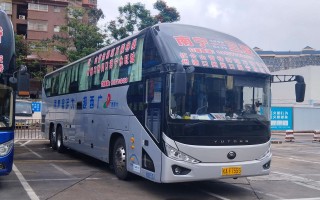
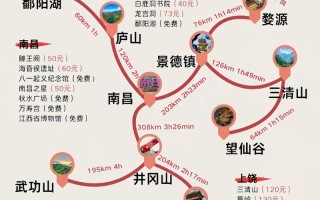
- Getting Around: Jiangxi has a good network of high-speed trains connecting major cities like Nanchang (the capital), Jingdezhen, and Ji'an. For more remote areas like Wuyuan and Mount Lu, buses or private tours are necessary.
- Local Cuisine: Don't leave without trying Jiangxi Stir-Fried Pork (赣菜小炒肉), Nanchang Rice Noodles (南昌拌粉), and Poyang Lake Fish (鄱阳湖鱼).
Jiangxi is a province of contrasts and wonders. It offers a profound journey through the heart of Chinese civilization, from the misty peaks of sacred mountains to the fiery kilns of its porcelain capital. Come and discover its many treasures.